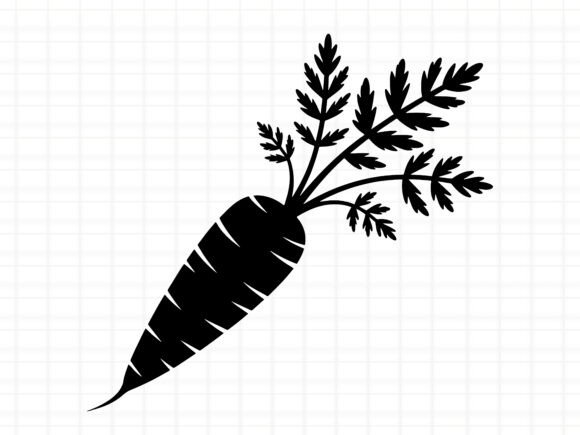
Carrot Silhouettes: A Designer’s Real-World Embroidery Review
Let’s be honest—when I first opened the Carrot Silhouettes pack, I wasn’t expecting much beyond cheerful clipart. But what landed in my workspace was something quieter, sharper, and far more versatile: 100 clean, confident silhouettes built around a single motif—carrots—each with its own subtle rhythm and spatial intelligence. As someone who’s stitched hundreds of designs for boutique apparel, baby gifts, and small-batch kitchen goods, I tested Carrot Silhouettes on a custom embroidered linen tea towel for a local farm-to-table café—and it changed how I think about “simple” embroidery graphics.
First Impressions: Not Cutesy, Not Generic—Just Thoughtfully Grounded
The mood isn’t playful cartoon or botanical illustration—it’s earthy, grounded, and quietly intentional. These aren’t cartoon carrots with faces or stems that wiggle like noodles. They’re cropped, balanced, and scaled with real stitching in mind: consistent negative space, generous stem clearance, and no fragile interior cutouts. That matters. When you’re digitizing for machine embroidery, every millimeter of stitch path affects thread tension, bobbin drag, and final clarity—especially on textured fabrics like linen or terry cloth. Carrot Silhouettes feels designed *for* the needle, not just the screen.
Where It Shines (and Where It Doesn’t Need to)
I used three variations across different projects: a single upright carrot (medium scale) on an organic cotton tote bag, a trio of staggered mini-carrots along the hem of a baby romper, and a centered large silhouette on a heavyweight apron. All held up. The design’s strength lies in its restraint—no fine linework, no nested curves, no micro-details that vanish under satin stitch. That makes it ideal for:
- Custom apparel—especially sweatshirts and relaxed-fit tees where bold, legible shapes read well from a distance;
- Embroidered patches—clean edges mean crisp cutaway and minimal fraying;
- Baby embroidery—soft, rounded outlines feel gentle without being saccharine;
- Holiday and wedding gifts—think carrot-shaped napkin rings, kitchen towels for garden weddings, or “rooted in love” aprons;
- Small shop product branding—works beautifully as a subtle logo alternative or seasonal accent for craft businesses focused on food, gardening, or wellness.
It’s less suited for ultra-fine applications: tiny cap fronts, dense layered appliqué, or stretchy performance knits without heavy stabilizer. There’s no intricate internal detail to justify those contexts—and that’s okay. Carrot Silhouettes doesn’t try to be everything. It excels where clarity, consistency, and quiet charm matter most.
Real Fabric Behavior: What Happens After the Hoop Comes Off
On medium-weight linen tea towels? Crisp. No puckering. The fill stitch density felt moderate—not too sparse (which risks gapping), not so dense it stiffened the fabric. On the baby romper (lightweight cotton interlock), I added tear-away + light cutaway stabilizer and reduced top tension slightly. Result: smooth, breathable embroidery that didn’t compromise the garment’s drape. On dark fabric, I tested black thread against navy twill—still readable, but I’d recommend white or cream thread for maximum contrast in commercial settings.
One note: avoid placing any of the larger silhouettes directly over seams or curved surfaces like cap crowns unless you’ve pre-tested the distortion. The clean lines rely on stable fabric geometry. Also—don’t skip the stabilizer step on thin or loosely woven fabrics. This isn’t a design that forgives instability.
Design Assets That Build Trust—Not Just Decoration
As an Etsy seller and small-batch embroiderer, I pay attention to how a design affects perceived value. Carrot Silhouettes reads handmade, not mass-produced. Customers notice that. When I listed the tea towel with a single centered carrot, buyers commented on how “intentional” and “crafted” it felt—even though it was machine-stitched. That’s the power of thoughtful negative space and balanced weight. It supports brand consistency without shouting. And because the pack includes SVG, PNG, DXF, EPS, and PDF formats, I could easily prep digital mockups for client approvals or generate printable hang tags—no extra vector conversion needed.
Practical Designer Notes Before You Stitch
Before using Carrot Silhouettes in your next embroidery project—or listing a finished product—here’s what I do every time:
- Test on scrap fabric first, especially if pairing with textured or dark materials;
- Check thread color contrast in both natural and artificial light—some greens shift unexpectedly;
- Review stitch density in your embroidery software; adjust if needed for delicate fabrics;
- Confirm hoop size compatibility—some larger silhouettes may require 5x7" or bigger;
- Inspect small details at 200% zoom: are stems cleanly connected? Are corners smooth, not jagged?
- Test black-and-white mockups to assess visual weight before committing to color;
- Compare light vs. dark fabric backgrounds—not all silhouettes translate equally;
- Use appropriate stabilizer—light cutaway for wovens, fusible for knits;
- Verify licensing terms before selling finished items or bundling Carrot Silhouettes into digital product kits;
- Ask yourself: does this support the story of my handmade product? If yes—it’s ready.
Final Thought: Simplicity With Substance
Carrot Silhouettes won’t wow with complexity—but it delivers something rarer in the Crafts and Graphics space: reliability with personality. It works for the hobbyist stitching their first pillow cover, the Etsy seller scaling holiday inventory, and the boutique owner curating cohesive kitchen goods. It’s a reminder that great embroidery design isn’t about how much you can fit in—it’s about how clearly and kindly it speaks through thread and fabric. If your next project needs grounded charm, quiet confidence, and zero guesswork, Carrot Silhouettes earns its place in your active design library.